
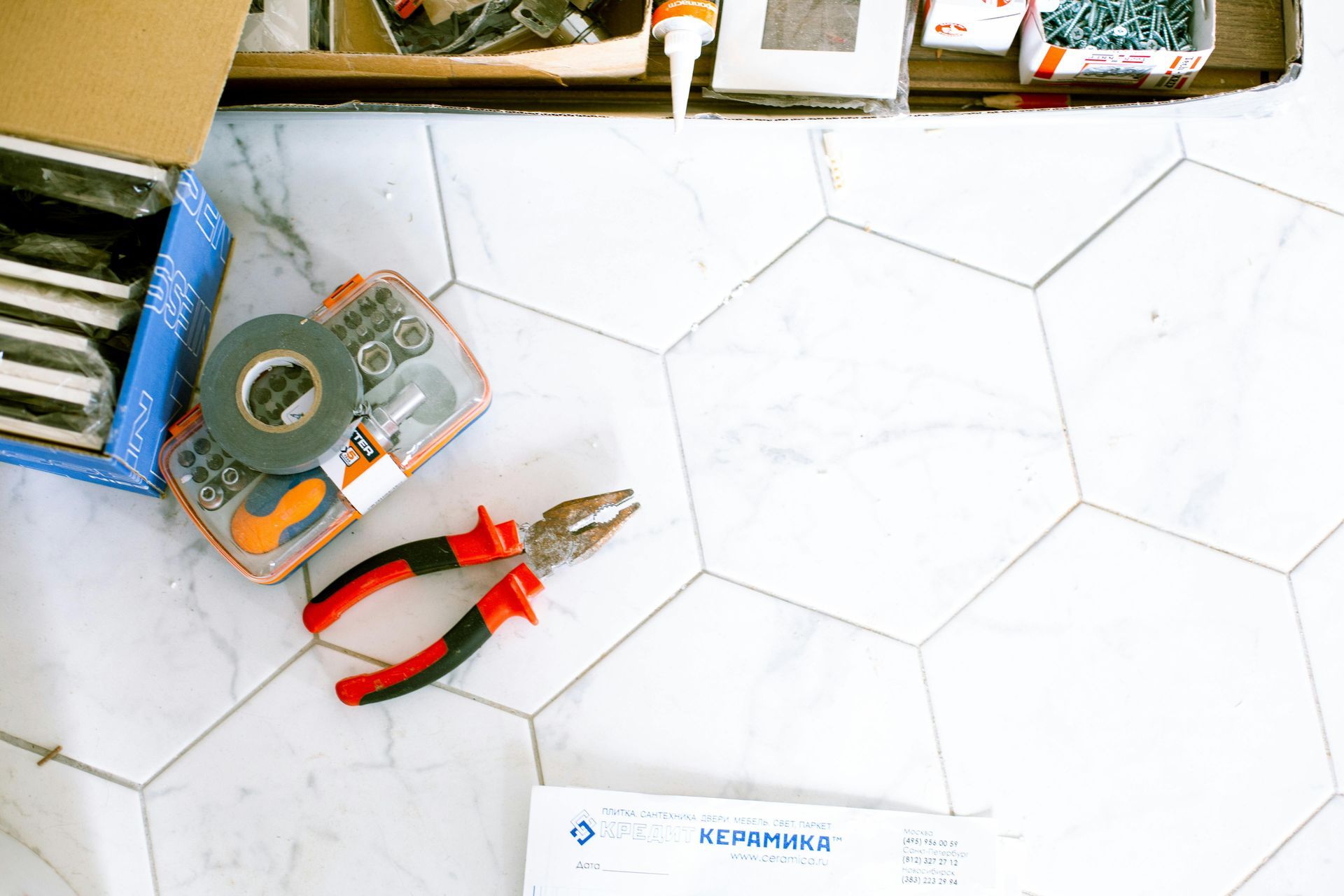
Durability and Easy Maintenance for Wet Areas
Tile in the Dallas, GA area for kitchens, bathrooms, and entryways where water resistance and long-term durability are essential
All Service Floor Covering installs tile flooring in Dallas, Georgia and surrounding areas, providing homeowners with a surface that withstands moisture, resists stains, and requires minimal upkeep in high-use spaces. You may choose tile when you need flooring that will not warp or discolor from water exposure, that holds up under dropped pots and pans, or that can be cleaned with strong household products without damaging the finish. Tile is available in ceramic, porcelain, and patterned formats, with glazed surfaces that come in matte, gloss, or textured finishes depending on slip resistance and aesthetic preference.
Tile installation begins with subfloor preparation, which must be rigid, level, and free of movement to prevent cracking. Installers may install cement backer board over wood subfloors to create a stable base, and they check for any flex or bounce that could cause grout lines to crack or tiles to pop loose. Layout planning determines where cuts will fall and how the tile pattern aligns with doorways, cabinets, and fixtures, and installers often dry-lay a section to confirm spacing and symmetry before applying adhesive. Grout is applied after the tile has set, and the width of grout lines affects both appearance and cleaning difficulty, with wider lines showing more dirt but being easier to repair if cracked.
If you are remodeling a kitchen or bathroom in Dallas, Powder Springs, Marietta, or a surrounding area, and want flooring that handles spills and daily cleaning without special treatments, contact All Service Floor Covering to review tile options and discuss your project scope.
What Tile Installation Delivers in Daily Use
When tile is installed properly, you will notice that the surface is flat and level across the room, grout lines are consistent in width and depth, and individual tiles do not rock or shift when stepped on. All Service Floor Covering ensures that the adhesive is applied evenly with no voids beneath the tile, which prevents cracking when weight is applied. The grout is sealed after curing to reduce staining and moisture absorption, and you will be able to wipe up spills without worrying about water seeping into seams or discoloring the grout over time.
After installation, tile requires no special cleaning products and can be mopped with standard household solutions, scrubbed with a brush to remove grime from grout lines, and disinfected without damaging the surface. All Service Floor Covering discusses grout color during the estimate, since lighter grout shows stains more readily while darker grout hides dirt but may contrast sharply with lighter tile. Tile also provides a cool surface underfoot, which some homeowners prefer in warmer months but others find uncomfortable in winter, and radiant heating systems can be installed beneath tile to add warmth if desired.
Installation timelines vary depending on room size and pattern complexity, but most projects take two to four days including adhesive curing and grout application. Transition strips are installed where tile meets other flooring types, and baseboards or quarter-round molding cover expansion gaps along walls. The floor is ready for light foot traffic after grout has cured, typically twenty-four to forty-eight hours, though heavy furniture should be kept off for a few additional days.
What Homeowners Want to Know About Tile Flooring
Choosing the right tile involves understanding how different materials, sizes, and finishes perform under daily use and how installation details affect longevity.
What is the difference between ceramic and porcelain tile?
Porcelain tile is denser and less porous than ceramic, making it more resistant to water absorption and suitable for high-moisture areas, while ceramic tile is lighter and easier to cut but may crack more easily under heavy impact.
How do I prevent grout from cracking after tile is installed?
Grout cracks when the subfloor flexes or when tiles shift due to inadequate adhesive coverage, so proper subfloor preparation and full-coverage thinset application are necessary to keep grout lines intact over time.
When should tile be sealed, and how often does it need resealing?
Grout should be sealed after it fully cures, usually one to two weeks after installation, and resealed every one to three years depending on traffic and cleaning frequency to maintain stain resistance and prevent moisture penetration.
How does tile size affect installation time and appearance?
Larger tiles cover more area quickly and have fewer grout lines, reducing installation time and making cleaning easier, but they require a flatter subfloor to prevent lippage, which is the uneven height difference between adjacent tiles.
Why do some tiles feel loose or sound hollow after installation?
Hollow-sounding tiles indicate insufficient thinset coverage beneath the tile, often caused by improper trowel size or technique, which leaves voids that allow the tile to flex and eventually crack under weight.
All Service Floor Covering provides in-home consultations and detailed project estimates throughout Dallas and the surrounding area, helping you select tile that matches your design goals and understand what to expect during installation. Reach out to review samples and discuss your remodeling timeline.
Request An Estimate
MEET WITH ONE OF OUR SKILLED PROJECT SPECIALISTS TO GET STARTED
Contact Us
We will get back to you as soon as possible.
Please try again later.